Gallery


×
![]()
Incheon National University
Open Positions
연구원 모집
Our Computational Science Laboratory is currently accepting applications for Ph.D., M.S., and Undergraduate research positions. These opportunities involve conducting cutting-edge research in deep learning/machine learning and mathematical optimization to address complex scientific and engineering challenges.
Computational Science Laboratory에서는 현재 박사, 석사 및 학부 연구생을 모집하고 있습니다. 우리 연구실은 딥러닝/머신러닝과 수학적 최적화를 활용하여 복잡한 과학 및 공학적 난제를 해결하는 최첨단 연구를 수행하고 있습니다.
M.S. Students
석사 과정
Undergraduate Researchers
학부 연구생
Alumni
졸업생
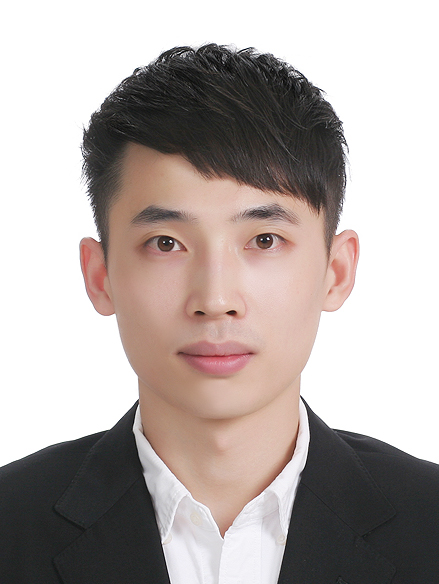
Assistant Professor
조교수
Hyun-Myung Woo, Ph.D.
Department of Biomedical & Robotics Engineering
Incheon National University
우현명
바이오-로봇 시스템 공학과
인천대학교
Education
Texas A&M University, 2022
Yonsei University, 2010
Yonsei University, 2008
학력
Texas A&M University, 2022
연세대학교, 2010
연세대학교, 2008
Selected Experience
Incheon National University, 2023 - Present
Brookhaven National Laboratory, 2022 - 2023
LG Electronics, 2016 - 2017
IDIS, 2010 - 2013
주요 경력
인천대학교, 2023 - 현재
미국 브룩헤이븐 국립 연구소, 2022 - 2023
LG 전자, 2016 - 2017
아이디스, 2010 - 2013
Honors & Awards
Incheon National University, 2026
KIIS 2025 Fall Conference, 2025
Incheon National University, 2024
Incheon National University, 2024
KIIECT Fall Conference, 2009
IDIS & ETNEWS Paper Contest, 2009
Yonsei University, 2008
Yonsei University, 2005 - 2007
수상 경력
인천대학교, 2026
KIIS 2025 추계 학술대회, 2025
인천대학교, 2024
인천대학교, 2024
KIIECT 추계 학술대회, 2009
아이디스(IDIS) & 전자신문 논문 공모전, 2009
연세대학교, 2008
Invited Talks
Inha University, Apr 2025
KIIS Spring Conference (Special Session), Apr 2025
Yonsei University, Oct 2024
Yonsei University, Oct 2023
Sungkyunkwan University, Apr 2023
BioSeminar @ Texas A&M University, Apr 2022
CSI Seminar @ Brookhaven National Laboratory, Mar 2022
BioSeminar @ Texas A&M University, Oct 2020
BioSeminar @ Texas A&M University, Oct 2019
초청 강연
인하대학교, 2025년 4월
한국지능시스템학회(KIIS) 춘계 학술대회 특별세션, 2025년 4월
연세대학교, 2024년 10월
연세대학교, 2023년 10월
성균관대학교, 2023년 4월
텍사스 A&M 대학교 (BioSeminar), 2022년 4월
브룩헤이븐 국립 연구소 (CSI Seminar), 2022년 3월
텍사스 A&M 대학교 (BioSeminar), 2020년 10월
텍사스 A&M 대학교 (BioSeminar), 2019년 10월
Teaching
강의
Journal Publications
저널 논문
Lee, Hae-Chan, Hyun-Myung Woo, Sungtae Shin
International Journal of Precision Engineering and Manufacturing, 2026
Jun Young Lee, Hyun-Myung Woo, Hyundoo Jeong
AIP Advances 16, no. 4, 2026
Jiang, Z., Isenberg, N.M., Subba, T., Woo, H.-M., Serbin, S.P., Urban, N.M., Kuang, C.
Journal of Advances in Modeling Earth Systems, 2026
Wonmin Lee¶, Hyun-Myung Woo¶, Ja Hyang Cho and Man S. Kim
Fronteirs in Oncology, 2025
Doingin Kim, Woo Jin Kim, Hyun-Myung Woo¶, Hyundoo Jeong
Current Issues in Molecular Biology, 2025
Kang, W.Y., Jung, S., Jeong, H., Woo, H.-M., Kang, M.-H., Bae, H., Cha, J.M.
Biomaterials Research, 2025
Woo, H.-M., Qian, X., Tan, L., Jha, S., Alexander, F. J., Dougherty, E. R., Yoon, B.-J.
Patterns, 2023
Chen, Q., Chen, X., Woo, H.-M., Yoon, B.-J.
Engineering Applications of Artificial Intelligence, 2023
Woo, H.-M.¶, Allam, O.¶, Chen, J., Jang, S. S., Yoon, B.-J.
iScience, 2023
Kim, W. S.¶, Khot, M. I.¶, Woo, H.-M.¶, Hong, S., Baek, D.-H., Maisey, T., Daniels, B., Coletta, P., Yoon, B.-J., Jayne, D., Park, S. I.
Nature Communications, 2022
Woo, H.-M., Hong, Y., Kwon, B., Yoon, B.-J.
IEEE Transactions on Signal Processing
Woo, H.-M., Yoon, B.-J.
Bioinformatics, 2020
Gu, M., Vorobiev, D., Kim, W. S., Chien, H.-T., Woo, H.-M., Hong, S. C., Park, S. I.
Progress In Electromagnetics Research M, 2020
Woo, H.-M.¶, Jeong, H.¶, Yoon, B.-J.
PLOS ONE, 2020
Woo, H.-M., Kim, J., Yi, J.-H., Cho, Y.-S.
IEEE Transactions on Vehicular Technology, 2010
Woo, H.-M., Kim, J., Yi, J.-H., Choi, S. Y., Cho, Y.-S.
SK Telecom Review, 2009
Hur, H., Woo, H.-M., Yang, W.-Y., Bahng, S. J., Park, Y.-O., Kim, J.
IEICE Transactions on Communications, 2009
Hur, H., Woo, H.-M., Bahng, S. J., Park, Y.-O., Kim, J.
KICS Journal, 2008
Hur, H., Woo, H.-M., Yang, W.-Y., Bahng, S. J., Park, Y.-O., Kim, J.
KICS Journal, 2008
Conference Papers
학술대회 논문
A N M Nafiz Abeer, Junhe Chen, Alif Bin Abdul Qayyum, Zhihao Feng, Hyun-Myung Woo, Seung Soon Jang, and Byung-Jun Yoon
NeurIPS 2025 Workshop on Tackling Climate Change with Machine Learning, 2025
Junhe Chen, A N M Nafiz Abeer, Alif Bin Abdul Qayyum, Zhihao Feng, Hyun-Myung Woo, Byung-Jun Yoon, and Seung Soon Jang
NeurIPS 2025 Workshop on AI for Accelerated Materials Design (AI4Mat), 2025
Kim, W.S., Woo, H.-M., Khot, M.I., Hong, S., Jayne, D.G., Yoon, B.-J., Park, S.I.
55th Asilomar Conference on Signals, Systems, and Computers, 2021
Woo, H.-M., Yoon, B.-J.
Asilomar Conference on Signals, Systems, and Computers, 2020
Hyun-Myung Woo, Woo Seok Kim, Sungcheol Hong, Vivekanand Jeevakumar, Clay M. Smithhart, Theodore J. Price, Byung-Jun Yoon, and Sung Il Park
Asilomar Conference on Signals, Systems, and Computers, 2020
Hyun-Myung Woo, Hyundoo Jeong, and Byung-Jun Yoon
ACM International Conference on Bioinformatics, Computational Biology, and Health Informatics (BCB), 2018
Hyun-Myung Woo and Jaekwon Kim
KIIECT Fall Conference, 2009
Hyun-Myung Woo and Jaekwon Kim
KIISE Gangwon Branch Conference, 2009
Hyun-Myung Woo, Jaekwon Kim, J. H. Yi, and Yong-Soo Cho
JCCI, 2009
Hyun-Myung Woo and Jaekwon Kim
KIIECT Summer Conference, 2008
Hoon Hur, Hyun-Myung Woo, W. Y. Yang, S. J. Bahng, Y. O. Park, and Jaekwon Kim
JCCI, 2008
Developing domain-specific artificial intelligence methodologies to address complex challenges in physics, chemistry, and biology.
물리, 화학, 생물학 도메인의 복잡한 난제를 해결하기 위한 도메인 특화 인공지능 방법론 연구.
Designing foundational Bayesian inference and optimization algorithms to ensure the reliability and performance of applied domains.
응용 도메인의 성능과 신뢰성을 확보하기 위한 베이지안 추론 및 최적화 기반 알고리즘 설계.
Fusing heterogeneous clinical data to develop data-driven healthcare systems that improve the accuracy of disease diagnosis and prognosis prediction.
이질적인 임상 데이터를 융합하여 질병 진단 및 예후 예측 모델의 정확도를 향상시키는 데이터 기반 헬스케어 시스템.
Cognitive modeling and decoding of multi-modal signals generated during physical robot operations and human-robot interactions.
물리적 환경 내 로봇 및 인간-로봇 상호작용 과정에서 발생하는 다중 모달 신호의 인지 모델링 및 디코딩 기술.
Overview
The Computational Science Laboratory (CSL) investigates foundational AI algorithms and their application to complex physical domains. Under the core framework of AI4X (AI for Scientific Discovery, Optimization, Robotics, and Healthcare), our research focuses on autonomous optimal decision-making, biomolecular structure analysis, and the design of intelligent architectures for cyber-physical and digital healthcare systems.
계산과학연구실(Computational Science Laboratory, CSL)은 인공지능과 복잡계 물리 도메인의 융합을 통한 핵심 알고리즘 및 응용 시스템을 연구합니다. AI4X (AI for Scientific Discovery, Optimization, Robotics, and Healthcare) 방법론을 기반으로 최적 의사결정 추론, 분자 및 생물학적 구조 해석, 그리고 사이버-물리 시스템 및 디지털 헬스케어를 아우르는 지능형 통합 아키텍처를 설계합니다.
Research Areas
1. AI for Science & Engineering
Molecular Design, Bioinformatics & Material Discovery
Constructing generative AI and Graph Neural Network (GNN)-based in-silico pipelines for de novo compound design, target protein binding affinity prediction, drug repositioning, and early-stage toxicity screening.
Utilizing physics-informed deep surrogate models to navigate thermodynamic state spaces, aiming to discover novel metal-organic frameworks (MOFs) and porous polymers with optimized carbon dioxide adsorption and selectivity.
Developing network alignment algorithms and secondary structure prediction models for RNA and proteins to elucidate the interaction mechanisms of biological complex systems.
Employing Physics-Informed Neural Networks (PINNs) with deep Lorentz layers to bypass traditional FDTD/FEM numerical bottlenecks, enabling the inverse design of functional metamaterials constrained by physical causality.
1. AI for Science & Engineering
분자 설계 및 과학적 발견
생성형 AI 및 그래프 신경망(GNN) 기반의 인실리코(In-silico) 파이프라인 구축. 신규 화합물 설계(De novo design), 표적 단백질 결합 친화도 예측, 신약 재창출(Repositioning) 및 독성(Toxicity) 스크리닝을 수행합니다.
물리 지식 기반 딥러닝 대리 모델(Surrogate Model)을 활용한 열역학적 소재 설계 공간 탐색. 이산화탄소 포집 효율과 선택성이 최적화된 다공성 고분자 및 금속-유기 골격체(MOF) 발굴 방법론을 연구합니다.
생물학적 복잡계의 상호작용 메커니즘을 규명하기 위한 네트워크 정렬(Network alignment) 알고리즘 및 RNA/단백질 2차 구조 예측(Secondary structure prediction) 모델링을 수행합니다.
물리 정보 신경망(PINN)과 심층 로렌츠 계층(Deep Lorentz layers)을 활용하여 수치해석(FEM, FDTD) 병목을 해소하고, 물리 법칙이 반영된 기능성 메타물질 역설계(Inverse design)를 수행합니다.
2. AI for Methodology & Optimization
Foundational Inference and Optimization
Integrating Reinforcement Learning (RL) into High-Throughput Virtual Screening (HTVS) pipelines to formulate optimal search policies that minimize the computational cost of chemical space exploration.
Combining Bayesian Optimization (BO) with Uncertainty Quantification (UQ) to evaluate predictive confidence, maximizing information gain and establishing optimal experimental designs (OED) for efficient search loops.
2. AI for Methodology & Optimization
추론 및 최적화 방법론
고효율 가상 스크리닝(HTVS) 파이프라인에 강화학습(RL)을 통합하여, 방대한 화학 공간(Chemical space) 탐색 비용을 최소화하는 최적 탐색 정책(Policy) 모델링.
베이지안 최적화(BO)와 불확실성 정량화(UQ)를 결합한 예측 신뢰도 평가 모델링. 정보 획득량을 극대화하는 최적 실험계획(OED)을 통해 모델 탐색 루프의 효율성을 향상시킵니다.
3. AI for Healthcare & Medical Systems
Clinical Diagnosis and Digital Healthcare
Fusing and registering multi-modal medical images (e.g., MRI, CT) using high-resolution vision modeling to extract clinical biomarkers and detect micro-lesions.
Applying deep-learning-based time-series analysis to audio and video data to track infant micro-behavioral and speech patterns, computing auxiliary diagnostic indices for developmental disorders.
Analyzing ambient Radio Frequency (RF) signals and vision data to perform non-contact monitoring of human activities and physiological signals (e.g., respiration, sleep apnea). By translating these inputs into contextual semantic language, we develop privacy-preserving, intelligent healthcare monitoring systems.
3. AI for Healthcare & Medical Systems
임상 진단 및 디지털 헬스케어
MRI, CT 등 다중 모달리티 의료 영상의 융합 및 정합(Registration)을 통한 미세 병변 검출 및 고해상도 임상 바이오마커 추출 비전 모델링.
음성 및 영상 시계열 데이터의 딥러닝 분석을 통해 영유아의 미세 행동 및 발화 패턴을 추적하고, 일상 환경 내 발달 장애 조기 진단 보조 지표를 산출하는 기술.
무선 주파수(RF) 신호와 비전 데이터를 융합 분석하여 환자의 생체 활동(호흡, 수면 무호흡 등)과 일상 행동을 비접촉 방식으로 모니터링합니다. 수집된 다중 모달 정보를 시맨틱 언어로 변환하는 캡셔닝 모델링을 통해 프라이버시를 보호하는 지능형 디지털 헬스케어 시스템을 구현합니다.
4. AI for Robotics & Cyber-Physical Systems
Physical Systems and Interaction Control
Decoding haptic and kinematic signals from remote robot control within a latent space to provide seamless physical sensory feedback to operators.
Enhancing the physical spatial awareness of robots through advanced vision recognition algorithms, enabling robust object detection and environmental navigation.
Developing meta-learning architectures and lightweight CNNs for the real-time classification of non-linear biological signals (e.g., EEG), enabling rapid personalization for robust HRI and BCI.
4. AI for Robotics & Cyber-Physical Systems
물리 시스템 및 상호작용 제어
원격 로봇 제어 시 발생하는 햅틱 및 운동학적 신호를 잠재 공간(Latent space)에서 디코딩하여, 작업자에게 정밀한 물리적 감각 피드백을 전달하는 딥러닝 알고리즘.
로봇의 물리적 공간 인지 능력을 향상시키기 위한 고도화된 비전 인식 알고리즘 연구를 통해, 정밀한 객체 탐지 및 주행 환경 인지 모델을 개발합니다.
비선형적이고 노이즈가 강한 생체 신호(EEG 등)의 실시간 의도 분류를 위한 메타러닝 및 경량화 CNN 아키텍처 기반 초고속 개인화(Personalization) 기술.
Research Grants
Current Projects
Internal Research Grant, Incheon National University, 2025 - Present
Completed Projects
Global Convergence Research in Humanities and Social Sciences, The National Research Foundation of Korea (NRF), 2026 - Present
Alchemist Project, Korea Institute for Advancement of Technology (KIAT), 2025 - 2025
First Research, The National Research Foundation of Korea (NRF), 2023 - 2026
Internal Research Grant, Incheon National University, 2024 - 2025
Internal Research Grant, Incheon National University, 2023 - 2024
수행 중인 과제 (Current Projects)
글로벌인문사회융합연구, 한국연구재단(NRF), 2026 - 현재
교내연구, 인천대학교, 2025 - 현재
완료된 과제 (Completed Projects)
알키미스트 프로젝트, 한국산업기술진흥원(KIAT), 2025 - 2025
생애첫연구, 한국연구재단(NRF), 2023 - 2026
교내연구, 인천대학교, 2024 - 2025
교내연구, 인천대학교, 2023 - 2024